Why Protein Bars and Health Foods Need Specialized Packaging
Walk into any supermarket, convenience store, or health food retailer today, and you will notice something interesting about the nutrition category.
Protein bars, energy snacks, granola bars, and functional foods often look surprisingly similar. Many products share comparable ingredients, similar sizes, and similar price ranges.
Yet some brands immediately feel more premium than others.
The difference is not always the product itself.
Often, it starts with the packaging.
A well-designed package communicates quality before the consumer reads the nutrition label. It suggests freshness, reliability, and a certain lifestyle that matches the expectations of today’s health-conscious shoppers.
For food brands, however, packaging is not only about appearance.
Behind every protein bar or health snack is a much more practical challenge:
How do you protect a small, high-value product while keeping it attractive, sustainable, and cost-efficient throughout the supply chain?
This question has become increasingly important as the health food market continues to expand. Brands are competing not only through ingredients and formulations, but also through how their products appear on crowded retail shelves and how they perform after distribution.
From a packaging perspective, protein bars and health foods are more demanding than they first appear.
Protein Bar Packaging Is More Complicated Than It Looks
At first glance, a protein bar seems like one of the easiest food products to package.
It is lightweight.
It has a fixed shape.
It does not require refrigeration in most cases.
However, the product characteristics create several packaging challenges that manufacturers need to consider.
Unlike dry snacks such as biscuits or crackers, protein bars often contain ingredients with higher fat, moisture, or protein content.
Common ingredients include:
- nuts and seeds
- chocolate coatings
- nut butters
- protein blends
- fruit pieces
- natural sweeteners
These ingredients can influence shelf life, texture, and packaging performance.
A bar that becomes too soft, develops surface changes, or loses its original texture may still be safe to eat, but consumers often interpret these changes as a quality issue.
For health food brands, maintaining product consistency is critical.
Moisture and Freshness Protection Are Key Considerations
One of the most important packaging challenges for protein bars is moisture control.
Even when products are considered shelf-stable, moisture migration can affect the eating experience.
Too much moisture absorption may cause:
- softer texture
- reduced crunchiness
- changes in coating appearance
- shorter perceived freshness
On the other hand, excessive moisture loss can also negatively affect texture.
This creates a balance that packaging needs to support.
For this reason, successful protein bar packaging decisions are usually based on the product formulation first.
A high-protein bar with nuts and chocolate coating may require a different packaging approach from a simple oat-based granola bar.
The packaging should match the product’s actual sensitivity—not simply follow what competitors are using.
Packaging Has Become Part of the Health Food Brand Experience
Health food consumers often evaluate products differently from traditional snack buyers.
They are not only looking for taste.
They also pay attention to:
- ingredient transparency
- sustainability
- brand values
- product quality
- lifestyle positioning
This changes the role of packaging.
For many health food brands, the box is not just a protective layer around the product.
It is part of the communication strategy.
A premium protein bar brand may choose a minimalist carton with natural colors and a soft-touch finish to reinforce a clean lifestyle image.
An organic snack brand may prefer kraft-style paperboard and simple graphics to communicate environmental responsibility.
A sports nutrition brand may choose stronger visual contrast and bold printing to create an energetic shelf presence.
The packaging structure and design need to support the brand story without increasing unnecessary cost.
Why Folding Cartons Are Popular for Protein Bars and Health Foods
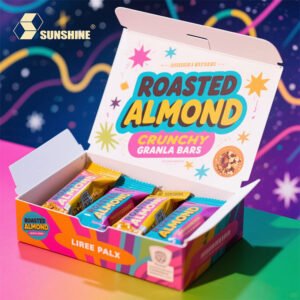
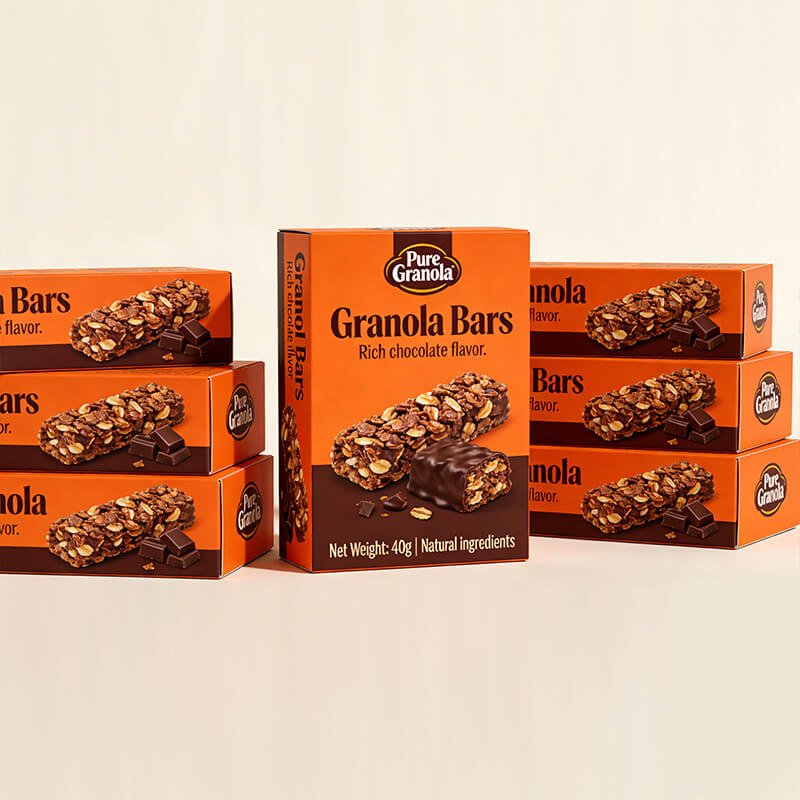
Although many protein bars use individual wrappers as primary packaging, folding cartons have become increasingly common as secondary packaging.
They offer several advantages:
Better Shelf Presentation
A carton creates more space for:
- brand messaging
- nutrition information
- certifications
- product benefits
- usage instructions
This is especially valuable for health food products where consumers often compare multiple options before purchasing.
Improved Product Protection
A paperboard carton provides an additional layer of protection against:
- crushing during transportation
- shelf handling damage
- external contamination
For premium products, maintaining a clean appearance until purchase can significantly influence consumer perception.
Better Multipack Solutions
Many health food brands sell:
- 5-pack boxes
- 6-pack boxes
- 12-pack cartons
- subscription bundles
Cartons provide an efficient solution for these formats while improving logistics efficiency.
For ecommerce brands, packaging strength becomes even more important because products experience more handling compared with traditional retail distribution.
Different Health Food Products Require Different Packaging Approaches
One common mistake during packaging development is treating all health foods as the same category.
In reality, product characteristics vary significantly.
Protein Bars
Protein bars typically require packaging that supports:
- freshness protection
- premium appearance
- retail display
- multipack efficiency
Brands often focus heavily on shelf impact because the category is highly competitive.
Granola and Energy Bars
Granola products may place greater emphasis on:
- protecting texture
- preventing crushing
- maintaining a natural brand image
Structural protection becomes particularly important because consumers expect visible quality from products containing whole grains, nuts, and seeds.
Organic and Natural Snacks
Organic products often rely heavily on brand trust.
Packaging choices frequently prioritize:
- recyclable materials
- clean printing styles
- transparent communication
- responsible sourcing
For these brands, packaging is closely connected with their environmental and ethical positioning.
Functional Health Foods
Products containing added nutrients, supplements, or specific health benefits often require more communication space.
The packaging needs to clearly present:
- product benefits
- usage instructions
- certifications
- nutritional information
A well-designed carton helps organize this information without overwhelming consumers.
The Biggest Packaging Mistake Health Food Brands Make
Many brands approach packaging from the visual side first.
They focus on:
- colors
- graphics
- finishes
- shelf appearance
These are important, but they should come after understanding the product requirements.
A visually attractive package that does not protect the product, fit the supply chain, or control costs will eventually create problems.
The most successful packaging projects usually begin with practical questions:
- How long is the expected shelf life?
- Where will the product be sold?
- Is it retail, ecommerce, or both?
- How will it be transported?
- What sustainability expectations do customers have?
- What production volume is expected?
These answers determine the right packaging direction.
Choosing the Right Packaging Materials and Structures for Protein Bars and Health Food Products
When health food brands start developing new packaging, the conversation often begins with one question:
“Which material should we use?”
It is an important question, but it is rarely the first decision that should be made.
The right packaging material depends on several factors working together:
- Product sensitivity
- Shelf-life requirements
- Distribution conditions
- Brand positioning
- Sustainability goals
- Production volume
A premium protein bar sold in specialty stores may require a very different packaging approach from a high-volume energy snack distributed through supermarkets.
There is no single “best” material.
The best choice is the one that matches the product, market, and supply chain.
Choosing the Right Paperboard for Health Food Packaging
For folding cartons used in protein bars and health food products, paperboard selection plays an important role in both performance and brand perception.
The most common options include SBS, FBB, and kraft-based paperboard.
Each has different advantages.
SBS Paperboard: Premium Appearance and High Print Quality
Solid Bleached Sulfate (SBS) is widely used for premium food packaging because of its smooth surface and excellent printing performance.
It is often selected for brands that rely heavily on visual presentation.
Advantages include:
- Excellent color reproduction
- Smooth premium surface
- Suitable for detailed graphics
- Good folding performance
- Consistent appearance across production batches
SBS works particularly well for:
- premium protein bars
- functional nutrition products
- luxury health snacks
- retail products competing for attention on shelves
For brands positioned around performance, innovation, or premium ingredients, SBS can help create a more polished appearance.
However, premium material does not automatically mean better performance.
For products where transportation strength and cost efficiency are the priority, other paperboard options may provide a better balance.
FBB Paperboard: A Practical Balance Between Quality and Cost
Folding Box Board (FBB) is one of the most commonly used materials for food folding cartons.
It combines:
- good stiffness
- reliable folding performance
- attractive printing results
- competitive cost
For many protein bar and health snack brands, FBB provides an effective middle ground.
It is suitable for:
- multipack cartons
- supermarket products
- subscription boxes
- large-volume production
Many growing brands choose FBB because it allows them to achieve a professional appearance without adding unnecessary packaging costs.
In large-scale food production, this balance is often more valuable than choosing the highest-grade material available.
Kraft Paperboard: Supporting Natural and Sustainable Positioning
Kraft-style paperboard has become increasingly popular among organic and environmentally focused food brands.
Its natural appearance supports brand messages related to:
- simplicity
- clean ingredients
- sustainability
- responsible sourcing
Typical applications include:
- organic snack boxes
- natural granola packaging
- plant-based nutrition products
However, kraft paperboard also has limitations.
Its printing appearance is different from white paperboard, and brands need to understand that the natural look is part of the design language.
Trying to achieve a luxury appearance on kraft material may require different printing strategies compared with premium white boards.
Selecting the Right Carton Structure
Material selection is only one part of packaging performance.
The carton structure determines:
- how products are packed
- how they are displayed
- how they survive transportation
- how consumers interact with the package
For protein bars and health foods, several structures are commonly used.
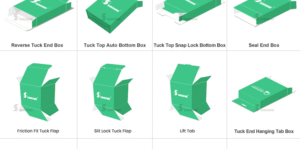
Reverse Tuck End Boxes: Efficient for Standard Protein Bar Packs
Reverse Tuck End (RTE) cartons are widely used because they are simple, efficient, and cost-effective.
They are suitable for:
- single product packs
- small multipacks
- retail shelf packaging
Advantages:
- Lower tooling cost
- Efficient production
- Easy automatic packing
- Good shelf appearance
For brands launching new products or managing multiple SKUs, RTE cartons are often a practical starting point.
Tuck Top Auto Bottom Boxes: Better for Heavier Products
For larger multipacks or heavier health food products, automatic bottom cartons provide additional structural support.
They are commonly selected when:
- product weight is higher
- faster packing is required
- stronger carton bases are needed
Advantages include:
- Stronger bottom support
- Faster assembly
- Improved packaging efficiency
For ecommerce health food brands shipping larger bundles, this structure can help reduce damage during transportation.
Sleeve Boxes: Ideal for Premium Health Food Brands
Sleeve-style packaging has become increasingly popular in premium nutrition categories.
Instead of relying only on graphics, the structure itself creates a more sophisticated unboxing experience.
Common applications:
- premium protein bars
- gift sets
- subscription boxes
- wellness products
Benefits include:
- Higher perceived value
- More design flexibility
- Additional branding space
For brands selling directly to consumers, packaging experience can become part of customer retention.
Window Cartons: When Product Visibility Matters
Some health food brands want consumers to see the product before purchase.
Window cartons can create transparency while maintaining the benefits of paperboard packaging.
They are often used for:
- natural snacks
- premium bars
- gift-style health food packs
However, windows should be considered carefully.
The additional material and manufacturing steps may affect cost and recyclability, so they should support a clear marketing purpose rather than being added only for appearance.
Printing and Finishing: Creating the Right Brand Impression
Health food packaging competes heavily through visual communication.
Consumers often associate packaging appearance with product quality.
However, more finishing does not always create better results.
The right approach is selecting finishes that support the brand position.
Matte Finishing
Matte surfaces are commonly used for:
- clean-label products
- organic foods
- premium wellness brands
They create a softer, more natural appearance.
Soft-Touch Coating
Soft-touch finishes provide a premium tactile experience.
They are often used when brands want packaging to feel different from standard supermarket products.
Embossing and Special Effects
Embossing, foil stamping, and selective finishes can highlight:
- brand logos
- certifications
- premium product claims
However, these techniques should be used strategically.
A health food brand built around simplicity may actually communicate better with restrained packaging rather than excessive decoration.
Sustainable Packaging Without Compromising Performance
Sustainability has become an important purchasing factor in the health food industry.
However, sustainable packaging is not simply about choosing recycled material.
Brands increasingly consider the entire packaging lifecycle:
- Material sourcing
- Production efficiency
- Recycling compatibility
- Transportation impact
- Consumer disposal habits
Common approaches include:
FSC-Certified Paperboard
FSC-certified materials help brands demonstrate responsible forestry sourcing.
Lightweight Structural Design
Reducing unnecessary material can lower environmental impact while also reducing shipping costs.
Plastic Reduction
Many health food brands are exploring paper-based secondary packaging solutions to reduce dependence on plastic-heavy packaging formats.
The key is finding the right balance.
A package that uses less material but causes more product damage may create a larger environmental impact overall.
Product protection remains part of sustainability.
How Health Food Brands Can Control Packaging Costs
Cost optimization does not always mean choosing cheaper materials.
The most effective savings usually come from better planning.
Standardizing Carton Sizes
Using similar carton dimensions across multiple products can reduce:
- tooling costs
- inventory complexity
- production adjustments
Optimizing Material Usage
Small structural improvements can reduce paper consumption without affecting performance.
Examples include:
- reducing unnecessary panels
- improving nesting efficiency
- adjusting dimensions
Planning Around Production Volume
Packaging economics change significantly with order quantity.
Large-volume brands may benefit from customized structures, while smaller brands often need flexible solutions that balance MOQ and cost.
Understanding expected growth is essential before finalizing packaging specifications.
Common Mistakes, FAQs, and Final Buying Advice
Choosing packaging for protein bars and health food products is not only a design decision. It is a balance between product protection, brand positioning, production efficiency, and long-term cost.
Many packaging problems happen because decisions are made from only one perspective.
Common Packaging Mistakes Health Food Brands Make
Choosing Appearance Before Function
A premium-looking box can attract consumers, but packaging must first protect the product.
A beautiful carton that cannot handle transportation, stacking, or storage conditions will eventually create unnecessary costs.
Using the Same Packaging for Every Product
Protein bars, granola snacks, organic foods, and functional nutrition products have different requirements.
Packaging should be developed around the product characteristics, shelf life, and distribution environment—not simply copied from another product category.
Adding Too Many Features Without Considering Cost
Special finishes, complex structures, and premium materials can improve shelf appeal, but they should support the brand strategy.
The best packaging solutions are not always the most complicated ones. They are the ones that deliver the right value for the target market.
Frequently Asked Questions
What packaging is best for protein bars?
The best packaging depends on product requirements and brand positioning. Folding cartons made from SBS, FBB, or kraft paperboard are common choices for multipack and retail presentation.
Are paper boxes suitable for health food packaging?
Yes. Paperboard cartons are widely used for protein bars, granola bars, and functional foods because they provide protection, branding space, and recyclable packaging options.
What material is used for protein bar boxes?
Common materials include SBS paperboard for premium products, FBB for cost-effective retail packaging, and kraft paperboard for natural and sustainable brands.
Is sustainable packaging important for health food brands?
Increasingly, yes. Many consumers associate sustainable packaging with responsible brands, especially in organic, natural, and wellness categories.
The best packaging for protein bars and health foods is not simply the strongest or most expensive option.
It is packaging that understands the product, supports the brand message, performs throughout the supply chain, and creates a positive consumer experience.
For growing food brands, the right packaging partner should provide more than manufacturing capacity. Practical experience in materials, structures, and production challenges often makes the difference between packaging that looks good and packaging that truly works.